


90-Degree Right Angle Drill Adapter Kit, Flexible Extension Shaft With Detachable Handle
90-Degree Right Angle Drill Adapter Kit, Flexible Extension Shaft With Detachable Handle
Couldn't load pickup availability

90-Degree Right Angle Drill Adapter Kit, Flexible Extension Shaft With Detachable Handle


Your Drill Has The Power. It Just Can't Reach The Screw.
Add a 90° right-angle head and flexible extension to reach screws hidden inside cabinets, furniture, corners and other awkward spaces where a straight drill simply cannot line up.

Some Jobs Aren't Hard. The Angle Is.
A full-size drill works perfectly in open space. Put the same screw behind a cabinet wall, under a shelf or inside a narrow frame and suddenly there is nowhere for the drill body to go.
The drill body cannot align with a screw positioned close to a wall or corner.
Cabinet walls, shelves and hardware leave too little room for a full-size tool.
You end up twisting your wrist, changing tools or removing nearby parts.
Bend Around The Obstacle. Keep Turning The Screw.
The flexible shaft redirects your drill's reach, allowing the bit end to approach fasteners from places the drill body cannot.
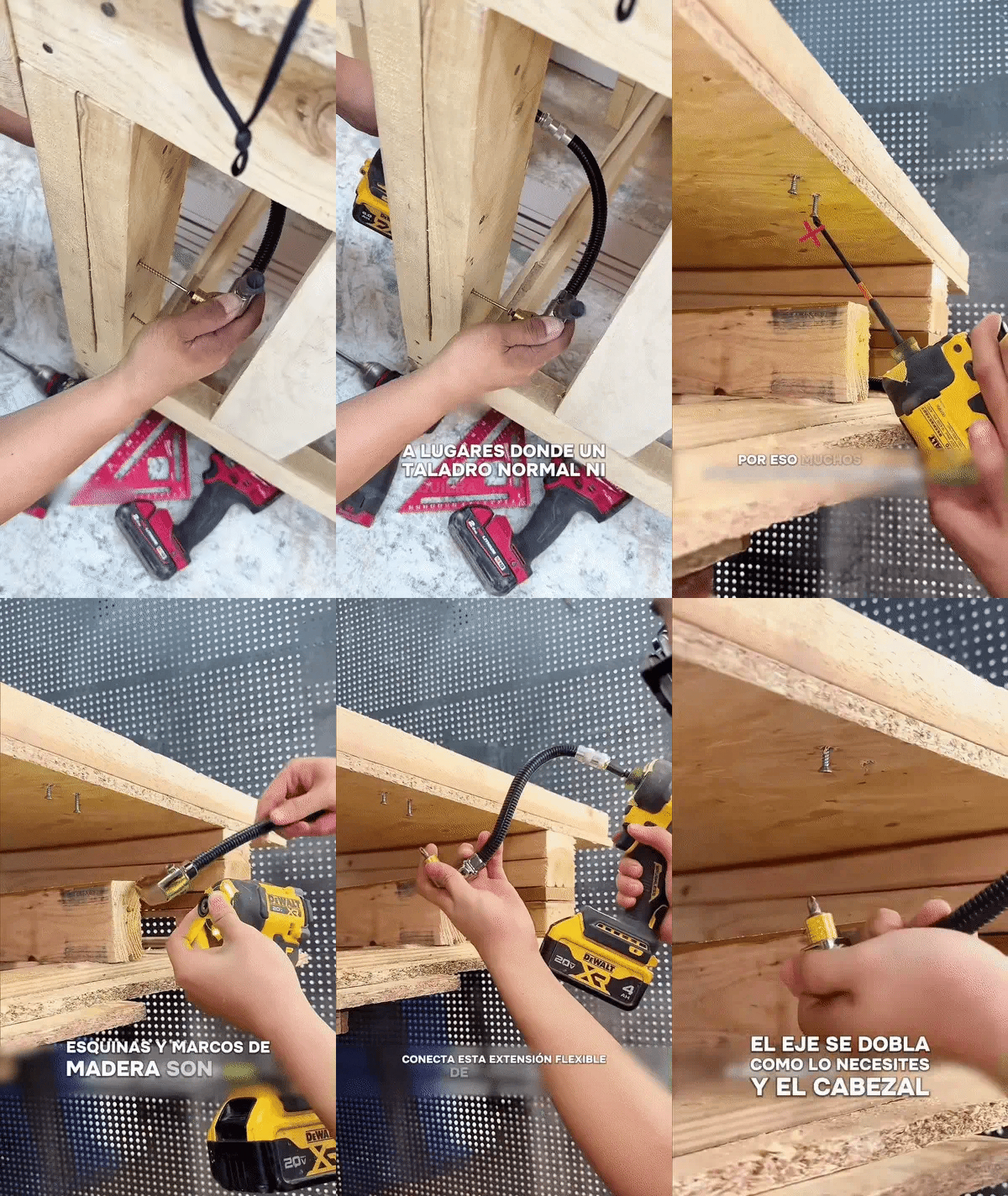
Turn The Corner. Or Bend Around It.
Tight spaces are not all shaped the same. The compact right-angle head helps where you need a short 90° profile, while the flexible shaft helps route rotational movement around common obstacles.

Shortens the working profile when a straight drill cannot fit between the screw and a nearby surface.
Routes the drive around panels, supports and other obstructions while your drill stays outside the tight area.
Straight Drill VS. Flexible Access

— Drill body needs room behind the bit
— Difficult beside walls and panels
— Awkward inside cabinets
— May require another hand tool
— Limited by the drill's physical shape
✓ Redirect the working angle
✓ Reach around common obstructions
✓ Keep the drill body farther away
✓ Better access to recessed fasteners
✓ More options before disassembling anything

Hold The Head. Guide The Bit.
A detachable auxiliary handle gives your free hand another place to steady the working end while positioning the bit in a confined area.
One Adapter. A Lot Fewer Awkward Angles.
Useful anywhere the fastener is accessible but your normal drill position is not.

Reach inner panels, hinges and recessed mounting points.
Work around rails, supports and narrow frames.
Reach screws located close to shelves and side panels.
Approach awkward fasteners behind fixtures and obstacles.
Get another working angle when your build becomes cramped.
Drive compatible fasteners where straight access is limited.
Try A Better Angle First.
Sometimes the frustrating part isn't the repair. It's removing shelves, panels or nearby hardware just to create enough space for your drill.

Built Around A 1/4-Inch Interface.
The current product uses a 1/4-inch connection. Confirm that your drill, driver and screwdriver bits can accept the required interface before use.
A Few Simple Habits Make A Big Difference.
Make sure the drill-side connection and bit-side connection are fully seated before applying power.
Let the flexible shaft bend gradually. Avoid folding it into a sharp kink.
Tight-space work benefits from controlled speed and steady pressure.
Wear suitable eye protection and follow normal power-tool safety practices.
More Reach. More Ways To Approach The Screw.
Frequently Asked Questions
What is this adapter mainly designed for? +
What does the flexible shaft do? +
Why do I need the 90-degree head? +
What is the detachable handle for? +
Will it fit every drill? +
Can I bend the shaft sharply? +
Should I run the drill at maximum speed? +
What jobs is it useful for? +
Does it replace a dedicated right-angle drill? +
Should I test it before starting the job? +
Stop Fighting The Wrong Angle. Reach The Screw Instead.
Turn the corner. Bend around the obstacle. Guide the bit into the space — and give the drill you already own another way to finish the job.